Skip to site contents

Fairfax Business Media network websites:


Wednesday, 4 June 2003

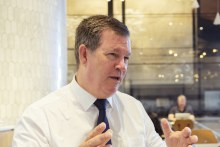
Roger Corbett

Speaker: Roger Corbett
ROGER CORBETT, CEO OF WOOLWORTHS at the AFR BOSS Club seminar on June 4, 2003

Transcript

Now, I’ve got to tell you the only trouble with that introduction is there’s a few people here that know me and they know that’s not quite true but nevertheless it was nice to hear. I’m really delighted to be here tonight and I’m thrilled there are so many people here. I know that, you know, on a midweek night you want something light, quick, to the point, feel you’ve done the job and been here, it hasn’t altogether been a waste of time and get home as quickly as you can. I understand the feeling and I’ll see if I can oblige.

I haven’t stopped yet. You know, my career started with my first purchase and I learnt a lot in that first purchase and in fact it really directed a lot of my subsequent commercial life. I had left school and I had a smallish sum of money by anyone’s measure and I decided to buy a car. I didn’t know much about buying anything let alone a car but I went to a car yard and I saw a very nice second-hand 1957 Morris Minor. It was black, little back window, some of you might remember the little back window model, a few might be old enough here to remember that. Headlights above the mudguard. Still had the spark plugs along the top of the engine. I think that means side valve or something, doesn’t it, I wasn’t too sure. But I walked around the car, looked intelligent, opened and closed all the doors, looked at the engine compartment, looked at the boot, thought I was very smart to check the spare tyre, and I asked the guy to start her up.

Now, as he started it up I noticed that a large black plume came from the exhaust pipe and he gave a little rev, not too much rev I noticed, but there seemed to be a fair amount of black smoke. So I said in my most threatening voice, ‘Does this burn oil?’ at which he was outraged at the suggestion, demanded I come immediately with him to his office and he’d give me the number of the previous owner.

Now, that was my first major mistake. I got to the office door and thought, this guy is genuine, and said, ‘It will be okay.’ Well, I bought the car and I needed to change down to third gear, sometimes second gear, to get over the hump in the Harbour Bridge, and what was particularly humiliating was that the car behind was often completely eclipsed from view because of the blue smoke that I was making.

Now, the purpose of this story was to tell you that this created a great demand for money that I did not have and neither did my father appear to have any inclination to help me and I needed a job. So I went to work at Grace Bros and so that started a marriage with retailing. I started in the Broadway store and subsequently went to the new store that had just been completed in Victoria Avenue, Chatswood where I started on the dock.

At the time it was a funny feeling because it was a place I had never been before and I felt quite threatened as a young lad. I certainly had to work unbelievably hard because my job was to pull the pallets from the dock to the supermarket floor and there was no motorisation of the pallets, you just had to pull them and they were really heavy. I found the environment entirely different to anything that I’d ever dealt with but it was immensely important because I learnt that those people that did manual jobs of that nature had a tremendous pride in what they were doing. The day was a very long one when you pulled pallets all day and there was a pecking order between the people that pulled the pallets and the fellow that operated the incinerator and the cleaner and the carpenter and the plumber and there was a code of behaviour and it had an immense impact upon me.

And so my career started with a really great respect for those people that in parlance might be called workers but in fact they were the people that made the business what it was. It’s had an immense impact upon me in terms of respecting them and appreciating what they did. Years later, in fact, probably 40 or more years later, recently I was standing at the counter in front of our Broadmeadows fish counter and the counter was just superb and I said, ‘Who does this counter?’ and a little lady called Mary came out, she had the Woolies outfit on, the beret was a bit skewiff, and she was smiling from ear to ear. I said, ‘This fish counter, this is just fantastic.’ ‘Oh,’ she said, ‘I’m so glad you like it.’

I said, ‘How’s business?’ and she ran through the numbers at the fish counter in Broadmeadows. I said, ‘That’s really really good, and I’m really delighted.’ I said, ‘What time do you start work?’ She said, ‘Well, my starting time is 6 o’clock but,’ she said, ‘I always get here about a quarter to 5 because I find that I need to get here early to get the amount of work done so when the store opens at 8 o’clock the fish counter is right.’ And I said, ‘Well, that’s fantastic.’ I said, ‘And what time do you knock off?’ ‘Well,’ she said, ‘my knock-off time,’ I think she said was 2 o’clock, ‘but,’ she said, ‘I find that I’ve got to stay till about 3.30 because if I don’t get the fish counter right,’ she said, ‘there’s not enough fish in there to carry it through to 9 o’clock tonight.’ And I said, ‘Well, you’re just making our business,’ and that smile upon her face her pride (and she’d been doing it for 15 years and she loved it) is something which makes our business go round.

I’d like to go back to my Grace Bros story and tell you 25 years later I was sitting in the Boardroom and in that 25 years Grace Bros had gone from being a battling department store in Broadway way off the centre where the activity was, yesterday’s location, yesterday’s store, with a small department store in Bondi Junction that I can still remember. The appliances were on the stage, you used to walk up the stage, it was an old theatre, and a small store in Parramatta and the hardware floor was still dirt and that was Grace Bros in 1960. Of course by 1985 it had spread throughout the whole of Sydney, was a great chain of excellent department stores and it was a vigorous business, it was magnificently run through most of that period of time.

I was sitting down with the auditors and they said something that I’ll never ever forget. They said to me, ‘What went wrong?’ because Grace Bros had just, after 25years announced its first profit downturn. David Jones, one of our great Australian retail icons as a department store in the sixties, in the seventies, in the eighties under the leadership of the second son, Charles Lloyd Jones it was full of people like Mary of Broadmeadows, people that were committed and wanted to work hard and wanted to be part of that business, but people were asking, ‘What’s gone wrong?’

Coles Myer, Coles was probably the greatest retail company this nation has known under the leadership of the Coles brothers, of whom three, I think, were knighted, and they bought Myer. What happened to that business, where does it sit today, was it Tooronga, was it Brian Quinn, was it Yannon? What went wrong? We’ve seen AMP in recent days lose nearly 75 per cent of its value and billions of dollars of shareholders’ funds, a very icon of our business society here in Australia. I bet the shareholders are asking what went wrong.

A few weeks ago the third largest retail business in the world, Ahold out of Holland - there are probably four leading retail international companies, starts with Wal-Mart, Carrefours in France, Tesco and maybe Ahold. Ahold had to announce that they had overstated their profits by $800 million about 34 per cent of a year’s profit. How could that be, $800 million? Their share price dropped overnight by 75 per cent. All their covenants were triggered and they’re at the mercy of their bankers and they were highly geared and they’re finished.

What went wrong? What went wrong? A few Saturday mornings ago I had a great privilege. I’ve visited Wal-Mart in America on many occasions and I was at what’s called the Saturday morning meeting, a custom started by Sam Walton. What happens in Wal-Mart is on a Sunday night about 40 planes take off from Rogers Airport which is near Bentonville, Arkansas. You’d hardly call it the epicentre of anything but very few companies have 40 or more planes, I think it’s 45

.

But they actually take off and they go all over the United States with the Wal-Mart executives on board. On Thursday night they fly home and all day Friday is spent in this intense discussion about the business, not about strategy, not about funding, not about world trends, but about that glass and what price is the best price to sell it at and why their competition has got a pack of six and they’ve only got a pack of twelve and sixes sell and twelves don’t and would it be better with a pattern on it and would the price be $1.25 or 98¢. They’re the things they talk about, the biggest retail company in the world.

And on Saturday morning the chief executive of Wal-Mart conducts what they call the Saturday morning meeting. It’s in an auditorium where they have 20 thousand people at 7 am. Attendance is voluntary. Everyone comes. The chief executive is in casual gear. The empathy and the feeling of the gathering is just unbelievable. They go through the numbers, they go through the profits. They talk about the initiatives that they’ve talked about on Friday and what they’re going to do and how they’re going to do it. They’ll say, ‘Have you got any visitors?’ and Billy will stand up, the buyer for something or other, and he’s got Mum and Dad there as well from Minnesota or Missouri or somewhere and they’ll get up shaking. There’ll be lots of people like that, wives, kids, families. But they’re focused on the business. There’s a caring, there’s a culture, 34 years of unblemished performance, the most profitable retail company in the world, the biggest commercial entity started in little Bentonville, Arkansas. How did it get to where it is and what went right as distinct to what went wrong?

I’m proud to be part of Woolies. In 1987 Woolies took its profit from $167 million to zero in one year. That was quite a feat, most people take a little longer, but they did it in one year, and of course what happened was, as it always happens, it’s happened to Ahold, the shares dropped dramatically on the market and Sir Ronald Brierley’s IEL saw a deal indeed and he bought Woolies for $650 million. A couple of years later John Spalvins saw that it was a deal indeed and he bought IEL and in effect valued Woolworths at $873 million. As you know, unfortunately John Spalvins hit a spot of bother and the banks took over and in 1993 Woolies was floated at $2.45 a share at a valuation of $2.45 billion, so if Mr Spalvins had been able to hang on for that little period of time he would have actually been okay because whereelse do you make $870 million become $2.45 billion? There’s not a lot of opportunities to do that and so he missed out on that but that’s the Woolies story.

In 1998 Woolies shares were $4.20. It was valued at $4.2 billion. Tonight Woolies shares closed at about $12.60 valued at just on $13 billion. What’s the key to business success? Of course you need to know your business. You need to be able to do your homework properly. You need to be able to undertake reasonable business management. You need to have good administration. You need to be able to measure your business. You need to be able to manage your risk. All those things that you know about and I couldn’t talk to you and add much to your knowledge.

But there’s something else, isn’t there, in business success. There’s something that makes a difference between the Wal-Marts of America and the KMarts of America. There’s something that makes a difference between a successful company and one that’s an ordinary company. There’s something that makes a difference between an extraordinary company and a company that is an average company. I’d like to use the word if I could, ticker. It’s been popular in political terms recently but ticker says something about the heart of a person or something about the heart of a company that actually causes it to have that something inside it that makes the difference.

Now, sure, it has to do about leadership. Sure, it has to do about sense of team. Colleagueship is a terribly important part of that process. It’s got something to do with what I like to call the aggregate of the whole, that people feel that they belong. Some people call it morale, a strong culture. All those things are true. But you have a spectrum of a healthy organisation. You have over here a healthy organisation, I’ll talk about the characteristics in a minute. But over here at the other end of this business scale is a commodity that I call cynicism. Over here you’ve got words like ‘care, commitment, pride in the firm, standards, we excel, satisfaction, leadership, success, values, qualities, absolutes, an egalitarian feel, people belong, there’s a spirit of walking the talk.’ All those characteristics - and no doubt you could add more - it adds up to a place where people like to be. It adds up to a place where people take pride in themselves no matter what the job, like our Mary at Broadmeadows. What a proud lady she is. She goes home with pride in her heart every night as much as anyone here has got pride in their professional lives.

But over on the other side you’ve got cynicism. You find they’re organisations with an emphasis on ‘me.’ You find expediency is often the rule, rationalisation, privilege, patronage, and an emphasis on self. I don’t mind if it’s a business organisation, a partnership of lawyers or accountants, but the more that you are on this ‘I care about this business and I care about my colleagues’ side, the more your business is at this end of the scale as against being at that end of the scale, the more healthy your business, partnership or whatever it may be, is. And to me it’s the difference between success and failure. It’s the difference that causes a business to have a heart and a soul, if you like, the ticker that makes success, as against one in which cynicism exists - what’s in it for me, what did he get out of it, how did he get what he got and I got what I got syndrome. What’s he paid, what am I paid? What’s my director’s fee, what is his director’s fee? How hard does he work, how hard do I work?

It’s in sharp contrast, isn’t it, to the environment that is over here. I look at the most successful and I am unashamedly an admirer and a disciple of Wal-Mart and its success. It’s an unbelievable culture and it sits over here. I think there are two underlying fundamental principles that drive a business over here and one I would call integrity. Integrity that has to do with absolutes. I’m honest and I’m honest, I tell the truth and I tell the truth. I care about other people, I care about other people. Absolute qualities that exist all the time.

We live in a world where that integrity and our sophisticated society have moved away from any fundamental type of underlying integrity in an enormous way. We live where expediency and rationalisation are so much bigger drivers. I’m committed to whatever it might be as long as it’s in my interests to be committed. The moment my personal interests bypass my commitment, I find some way to rationalise or some expediency to rationalise what is clearly not rational. More and more the path of our society.

The other fundamental principle that I think underwrites that culture is a caring for other people. A great philosopher and teacher many years ago said, ‘Do unto others what you’d have them do unto you.’ If you take those two characteristics of integrity and care for others, then you underwrite in those two words the principles that have businesses at this end of the spectrum as against cynicism at that end of the spectrum.

I love profits. I love having record profits. I love having return on investment that’s better than anyone else. I love driving every dollar out of the business. I like the fun of working together to create a vibrancy in the business and saying that nothing can never be done. Everything can be done and when there’s a challenge that’s great fun to face up to that challenge and to win. When there’s a competitor to beat it’s immense fun to beat that competitor. It’s immense fun to have stores that are effective and good machines, which are well presented, great prices, great service. I love working together to make a profit. If there wasn’t a profit there wouldn’t be a business.

But when all of life is done I actually won’t remember all the profits I don’t think. They were important but what I will remember is my colleagues and the great joy of working together in colleagueship. And so I’d put to you that real success and really effective organisations are organisations that have fundamental integrity and have a fundamental attitude of caring for the people that work in that organisation. You show me the most successful Companies in the world and I’ll show you Companies that have a sense of integrity and pride and ethics and a sense of caring and supporting their people because the greatest power that any company can have is to havepeople in their organisations at all levels that feel as though they belong, that feel as though their contributions count, feel as though they’re secure, and have leadership in those companies that walk the talk in all that they do.

To us as business leaders we have enormous responsibility. In our business there are 147,000 people. There are literally tens of thousands of Marys. They’re entitled to expect their leaders in their business at all levels to be people that give that business real leadership, that ensure through skill and commitment and knowledge that the business is kept on track, that’s our obligation, that’s our responsibility, that’s what we’re paid to do. But more than that, they can rightly expect that the leadership of the business has fundamental integrity and produces and creates an environment where they are protected and their contribution is valued and supported. They are the key elements, in my view, in the success of a business. Thank you very much.

Questions:

Q: Roger, thank you, very inspirational. Stephen Leonard, Crown Executive Search. I’m very interested in how you would define the Woolies culture and how do you assess who fits that culture.

ROGER CORBETT: Well, a lot of people fit that culture. I would describe it as egalitarian, no one wears their coats in our business, my name badge says Roger and I wear it with pride. It gives me immense delight when I go into a store, people come up and say, ‘G’day, Roger, how’s your business?’ that type of fundamental egalitarianism. Of course, people are paid and it would be hard not to do so, salaries reflect their responsibility but apart from that the company is almost completely egalitarian. Offices are simple, privilege is practically zero, everyone uses the same toilet, everyone uses the same lunch room. We all need a job. We’re all employees of the company and we’re all workers. That spirit I think is enormously important.

It must be then translated into very good human resources policies that actually express those values. So it’s no good to have those values without having a really good set of business principles and methods of operation that actually produce an environment where people can work and be developed and be looked after in every sense of the word. Our business is a tough business. People work long hours. Service in stores is very demanding. Our buying offices and warehouses work long hours. If we want our people to feel a commitment to that then it’s vital that they must know and see we have a commitment to them.

Q: Thanks, Roger, that was great. Martin West from Afterburner Seminars. Two quick questions. The first one, what would be the single greatest strength that you think you bring to the leadership of Woolworths, and what would be a personal leadership struggle you’ve identified in your soul?

ROGER CORBETT: Well, look, I think that others would have to answer the first question, I just do my best to lead the company by example and I don’t ask people to work hours I’m not prepared to work myself. I would hope that I lead, I hope that I walk the talk, that’s what I aspire to do. What would be my weakness? Well, there are so many of them I don’t know where to start but probably impatience, probably an impulsiveness from time to time. I’ve got lots of faults, I don’t think I will tell you any more but there are a lot. I’ll give you my wife’s number, she’ll be able to tell you.

Q: I’m a graduate from PricewaterhouseCoopers. I just wanted to ask a very simple question hopefully. What is the one skill or one major factor that you’re looking for in regards to your, I suppose, quality that you want from the next CEO or the person that’s going to succeed you? I think from your talk you focus a lot on care, and also how do you reach out to your staff? You said that you’re all workers. There’s so many employees in Woolworths. Can anyone contact you, how do you control that? As a CEO obviously you are so busy, how do you make time for, you know, all your staff?

ROGER CORBETT: Well, I spend a lot of my time walking around our stores and whenever I go to a store I make sure that everyone that is in my line of sight, everyone I greet, so I don’t let anyone walk by me or anyone be anywhere that I don’t say g’day to or have some comment or thank them for their efforts or tell them how good something looks. So that is terribly important and I think when you do that a lot of the time then a lot of people get to know you. I never walk down any corridor, walk into a lift, the foyer, anywhere without greeting all the people, so if I get in a lift I’d always talk to all the people in the lift. Sometimes I find that people don’t work for us, that’s a bit embarrassing but - (LAUGHTER) - and I personally want to use every opportunity to actually speak to the people that I can everywhere, it doesn’t matter where they are, that I possibly can, and I do hope that people feel that they can bail me up and talk to me and I think a lot of them do.

What’s the characteristic for the next CEO of Woolies? Well, I think, you know, all the business skills are obviously given but I think personal skills - and I’m not suggesting for one moment I exhibit any of this but I think humility is a really important characteristic, recognising that there are so many people around you that are better than you, to listen to them is enormously important and to give them an opportunity, and I think personal integrity.

Q: Thank you. Susan Andrews. Thanks very much for a most entertaining oration. It certainly has done the job on a Wednesday night. I just wonder what components of your leadership in such a strong company culture that has been engendered, what components of that do you think have ended up meaning that the Fresh Food People have meant something to the general community, why that branding has been so significant and so successful?

ROGER CORBETT: Thank you for the question. Of course it was started by the late Harry Watts who was a great chief executive of Woolworths. Some of you might have known Harry, he was a great big man, really humble man, great sense of humour, who died playing golf with Greg Norman on Royal Sydney on the ninth hole. Apparently his favourite stroke, his favourite iron was a seven iron, he’d just done a superb shot and he turned to his wife who was in the crowd and went and as he still had his thumb in the air he dropped dead. So it was a terrible, terrible death but if you’re going to go and you like golf it seems to me - (LAUGHTER). I know if it happened to me it would be after a lousy shot.

But he started the Fresh Food People and I think it was a brilliant stroke. It just said something and we’ve worked very hard on developing that. I know we always don’t reach the mark so what I say to you is qualified - I know because I’m around the stores and I see too often we don’t - but we try very hard and for it to be successful and you’re going to say that it almost has to become like a religious tenet in your life. We just cannot tolerate a situation where we’re not fresh and we don’t present the freshest possible product. I suppose the greatest aggro that I have is when I go into a store and find things that should not be as they are.

Preserving and building and protecting that fresh food image and providing the offering - there’s a lot of people that think petrol is important but actually petrol is not important. It’s a help and our competitors have done an interesting deal, but what is important is selling food and selling it really well and if you can gather people around that concept of the fresh food - and it is a gatherable thing then it’s really worth doing. The real trick, of course, is to maintain the rage and keep the fever there and, you know, that lady at Broadmeadows is such an example of what it’s all about.

Venue