Skip to site contents

Fairfax Business Media network websites:


Thursday, 10 March 2005

Hear it from the BOSS: The Big Ideas (Melbourne)

Speaker: Adam Spencer
Broadcaster and commentator Adam Spencer lead an expert panel through a discussion designed to provoke debate about where our world is heading.

Transcript

MR ADAM SPENCER: Ladies and gentlemen, hello and welcome to the inaugural Melbourne AFR BOSS Forum on Big Ideas in Business.

Today we look at the big ideas and ask the big questions about business in Australia in 2005 and beyond.

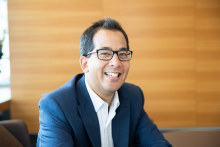
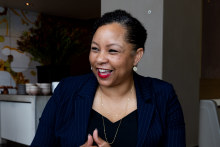
Our five panellists this evening: seated closest to me is Sharan Burrow. She's currently President of the ACTU and one of Australia 's most high profile union leaders. Next to Sharan we've got Giam Swiegers. Giam, as many of you would know him, is the CEO of Professional Services, Deloitte, recently voted Australia 's most innovative services firm by BRW magazine.

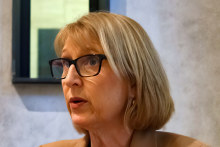
Now, with our next guest, until recently I thought I understood how the Australian of the Year award worked? Steve Waugh, Mark Taylor, Pat Rafter, Allan Border. Australian of the Year was an annual celebration of unemployed Aussie blokes in their thirties who until recently had been good at belting balls, but it turns out there's a little-known subclause that says the award should also acknowledge world?class kick?arse female Australian scientists called Fiona, because in 2005 medical research and Fiona Stanley was joined in that club by the head of a specialist burns unit at Royal Perth Hospital, Australian of the year, Fiona Wood.

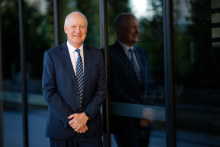
Our fourth panelist, Trevor O'Hoy, is the CEO of the Fosters Group, where he's worked for 30 years.

And our final panelist has many impressive attributes, not the least of which is he uses the same hairdresser as I do. Dr Clive Hamilton is the founder and executive director of The Australia Institute. His next book, Affluenza, is due out in June.

He's going to start us off tonight with a keynote address, after which we'll have panel discussion, another keynote address and then questions from you the audience. So please welcome Dr Clive Hamilton.

DR CLIVE HAMILTON: Thank you very much. Well, growing numbers of Australians are asking themselves what is, I think, a deeply subversive question: "Now that I'm affluent, am I happy?" This question, I think, poses a profound challenge to business. It turns out that wealth creation may not be all it's cracked up to be. Despite the fact that Australians are three times richer than they were in the 1950s, surveys show that they are no more satisfied with their lives, and the same phenomenon applies in other rich countries.

It seems that sustained economic growth has solved most of the problems of material deprivation but the paradise promised by high incomes is more elusive than ever. For instance, one of the most disturbing facts about life in affluent nations is the extraordinary prevalence of mental illness. In the USA , rates of depression have increased tenfold since the Second World War, and the World Health

Organization says that major depression will soon become the second most burdensome disease in the world. What's going on?

It's time to admit, I think, that beyond a certain point the pursuit of more money doesn't make us happier and, in fact, comes at the expense of things that really do improve our well-being. Rising debts to fund extravagant lifestyles can make us prisoners of our own aspirations. The constant pressure to outdo our

colleagues and neighbours leads to stress and illness, especially if they beat us. And long work hours often drain the life out of our relationships with loved ones.

Contrary to the image of the laid-back Aussie, Australians have the longest working hours of all OECD countries, longer even than Japan . The human cost of this is just starting to be recognised. You might have read that last year Macquarie Bank organised a weekend retreat for its senior executives with their sons. Fathers and sons were encouraged to bond by wearing the same coloured bandannas. Some unkind people suggested this was so that the sons would recognise their fathers.

A friend of mine who has done work with the organisation says she couldn't think of anything worse than spending a weekend away with a bunch of Macquarie Bank executives. But, let's face it, people who are preoccupied with money tend to be more selfish and unpleasant to be around, yet Australians are far more preoccupied with money than they have ever been, despite their affluence. In fact, I would say it's because of their affluence.

Instead of asking ourselves whether we're setting the wrong goals in our own lives and nationally, we just set higher ones. "That amount of money didn't make me happy. Damn! I'd better set a higher goal and then I'll be happy," but somehow you never get there, and this is known as the hedonic treadmill.

When we judge our lives by money and material things, no matter how hard we pedal we never get anywhere. So it's not the problems of poverty and exploitation that will dominate Australian society in the next five or 10 years but the sicknesses of affluence.

Despite the extraordinary outbreak over the last decade of affluenza, most Australians know that things are seriously out of whack.

Nearly nine in 10 Australians believe that moral decline is due in large measure to the fact that we are too materialistic. Some people respond to this sort of questioning of the whole growth project by saying, "So you want us all to be poor again, do you?" Well, of course, this wilfully misunderstands the argument. The choice is not between a mansion or a cave, 60 hours a week or no work at all, living in Kew or living

in Nimbin. All or nothing is the old way of thinking. The new way is to ask, "Well, how much is enough?" And here is, of course, a huge challenge for business.

People are starting to ask, "What's the point of our affluence? Work, buy, consume, die. Is that all there is to life?" The true choices that affluence was meant to provide have been swamped by the false choices of the market place.

I'm free to choose amongst any of the 49 brands of olive oil that I can find on the shelves of my local Coles supermarket, but that variety of consumer choice has come at the cost of true life choices, and the reality is that business can't solve that problem, although it can help its employees to find a better balance.

When we think of the forces that will shape our world over the next decade, we have to ask whether we as citizens in a democratic polity

are going to choose how our society and our own lives evolve or whether we're just going to leave it to the market and the weird world view of the marketers.

The vast majority of income growth in Australia over the next two decades will be spent on consumption goods, the craving for which has yet to be created by advertisers, yet more and more Australians are waking up to the idiocy of a consumer life. Anyone who watches ads critically can only be astonished by how profoundly deceptive modern advertising is. Of course, our political leaders and newspaper columnists are obsessed with economic growth despite the mountain of evidence that for rich countries it will make no difference to national well-being. Picking out growth in GDP, journalists write as if they have found an infallible barometer of the nation's well-being.

Where is the Nirvana we were promised if only we sacrificed all to higher economic growth? It's time we woke up from the dream of endless growth, and increasing numbers of Australians are doing so. More and more Australians are deciding to call a halt and choosing to downshift. They're changing their lives and voluntarily reducing their incomes. Some change careers, some cut their working hours, others do that thing they always wanted to do.

Our research at The Australia Institute shows that nearly a quarter of 30 to 60-year-olds have made that change over the last decade. They come from all walks of life, young and old, men and women with big incomes and even quite modest ones. Whether they're motivated to be there as their children grow up, to avoid a heart attack or just to get some balance back into their lives, the downshifters know that they have lost control of their lives and want to take it back. They have decided they want a rich life instead of a life of riches. After all, as Lily Tomlin said, "The trouble with the rat race is even if you win, you're still a rat." Thank you.

MR ADAM SPENCER: Well, Clive hasn't mucked around and started with quite a big question: Is the system itself fundamentally working? I might ask you, Sharan Burrow from the ACTU. You deal with workers across the spectrum all the time. Is there a general feeling that these sort of challenges that Clive has raised are valid in the Australian workplace at the moment?

MS SHARAN BURROW: Well, working people will tell you that despite their financial stress - and they are in considerable financial stress; household debt has doubled in just the last few years ? it's the time stress that really is of the greatest concern, and particularly for working people with families. So we can do something about that.

We actually believe if you take the best of corporate practice and you take the best of

international regulation, then you can give people a sense of choice and, therefore, a sense of management: simple things, the right to request a rostering choice or a shift in working hours so you might be able to take your kids to school or pick them up after school without feeling that stress of having to be at work at nine o'clock or at the start of your shift; the capacity to actually purchase an extra few weeks' leave by asking you, the employers, for slightly less on an annualised basis so you can spend part or all of the time of the school holidays with your kids; and the really big one, for women in particular - increasingly men, but for women with family responsibilities ? part-time work, secure, permanent part-time work.

It requires you to think about how you define the roles, but it can be done, and it would increase productivity and it would do something about the stress that actually threatens the productive base of your own workplaces.

MR ADAM SPENCER: Okay. And I might ask you, Trevor, at the CEO end I get the impression that if you're a CEO or upper management these days and you spend less than 167 hours a week at work you are letting the team down and you're just going to be devoured by someone younger and hungrier and stronger. Is there brutal time pressure placed at the top end of management these days, and, if so, how does it manifest itself and what do you do about it?

MR TREVOR O'HOY: Well, I think, Adam, from our perspective I'm not a fair case there. I mean, it's absolutely true what you're saying, that with our industry, we're in the business of selling dreams and experiences and we expect our executives to share in those dreams and experiences, and that's where we get the balance. If it was just purely being CEO or CFO, you can fall into that or get on to that treadmill.

I'm one of the luckiest executives in the country because we have products that are all about experiences and fun, and I can tell you we have a lot of experiences and a lot of fun along the way. So that's where we get our balance.

MR ADAM SPENCER: So it's your job as CEO to be constantly across the Fosters product and aware of it?

MR TREVOR O'HOY: Absolutely. And I'll talk about it later. Where else do you get paid to go into bars and experiment with products and meet your consumers? And I'm hoping you're all consumers out there. And that's the industry I'm in, and I'm so lucky to be in that industry. That's one of the reasons I've been around for 30 years in one industry.

MR ADAM SPENCER: But whilst we were out in the back waiting to come out and I was going to quickly brief people on a couple of things we'd do tonight, I waited until there was a moment when none of you were on your mobile phone for work-related business, and that took 25 minutes to find a 30?second window where three or four of the five of you weren't banging away at work even though you were waiting backstage about to come on in front of 600 people at Melbourne Town Hall and do some work. So is that, especially at the boss end, a sort of technological grab on you that's getting stronger and stronger all the time?

MR TREVOR O'HOY: It's constantly with you. These BlackBerries are fantastic innovations, I think. To keep you informed with what's going on with your businesses all around the world, it's perfect, but there's a point of diminishing returns because with all the information coming at you - it's great - you often make the mistake of responding to the e-mails, and that's great, but then that leads to another set of e-mails, and you're constantly on this treadmill, but I've got to say I'd much rather know what's going on than what's not.

MS SHARAN BURROW: They've got a nickname, Adam. They're called CrackBerries.

MR ADAM SPENCER: Because they're so??

MS SHARAN BURROW: Addictive. People can never get away from them.

MR ADAM SPENCER: Is this something that your research uncovered for the Affluenza book in particular, Clive? Are people more tied to their work even when you're not physically at work? Does that create more stress?

DR CLIVE HAMILTON: Oh, absolutely, and the deregulation of the labour market over the last 15 years or so has been very much a mixed blessing. I mean, potentially it's opened up the opportunity to many people to live more flexible lives and combine their other interests and passions with their work, which is a good thing, but it's also meant that many people have been forced to sacrifice their weekends in order to pursue their work interests and to spend longer at work.

I was giving a breakfast presentation in Sydney a month or so ago at a very major accounting firm, and I rocked up at seven o'clock with everyone else, and I was chatting to the bloke who was going to sort of MC the event, the sort of senior person at the accounting firm, and I said, "Gee, I wouldn't want to turn up to work this early every morning," and he said, "Oh, probably I come on in about this time," and I said, "Oh, why?" and he said, "Well, I've got a couple of young kids and, you know, they're awake as 6.30 so I figure I might as well go to work." And I said, "Well, what does your wife think about that?" And I think there's a real, you know, this obsession, compulsion with work is coming at considerable, huge personal cost both to the workaholics themselves and their families, who often get neglected.

MR ADAM SPENCER: In the world that you're in, Fiona Wood, which is sort of a hybrid business/academic field, is there just as much pressure in the workplace these days, more than there was 10?20 years ago?

DR FIONA WOOD: Oh, yes, definitely it's changing. When I first started in my sort of training through learning how to be a surgeon we were expected to work ? in a 14?day stretch we worked 12 days and seven nights. We don't allow that any more. We've brought in regulations that ensure that the junior doctors get a sleep and that sort of thing. So there is a lot more understanding that people actually perform better if they're not sort of asleep standing up. You know, they can actually operate better if they're awake! In the medical profession we've learnt that. But then you look at making yourself available, and that's very important, because the flexibility of being available to facilitate that ongoing training in the junior staff means that the technology that we're talking about is vital, and certainly from my point of view having so many kids and doing so many different things, if I wasn't able to have that connection with all the things I do, then I would not be able to function at that level.

MR ADAM SPENCER: So our audience should be moving out of corporate law and big business and into surgery because - that's the place where you get some sleep now and then.

DR FIONA WOOD: That's right.

MR ADAM SPENCER: Giam Swiegers from Deloitte -you know, that's the hard edge of accounting and business analysis. I would picture that as the sort of place where, especially when a deadline is coming up, there must be brutal working hours that people have to put in sometimes. How does it balance?

MR GIAM SWIEGERS: Well, that is one of the big concerns that we have. Over 60 per cent of our staff is younger than 30, and they tend to work very long hours, and there are times when the level of work becomes a big concern to us. We get a monthly report that shows us the utilisation or working lifestyle of every one of our teams, and when a team goes over a certain period you become very concerned about it, but the reality is if there's a bunch of activity going on you have no choice; it has to be completed under deadlines. But it is an area that we preach about quite a lot, and you try and role model your own behaviour to show people that you have to have a balance and stress the importance of family life, but at the end of the day when you're working with very young, very competitive people, they will work hard, and your job is to stop them from killing themselves in the process.

MR ADAM SPENCER: Do you actually have that on your business card? Is that your official job description?

MR GIAM SWIEGERS: Well, I do have on my business card that you have to have fun and celebrate.

MR ADAM SPENCER: Sharan, with workers who are possibly more the general workforce in the union areas I get the impression, that the overtime and the unpaid overtime is some of the equivalent sort of factors to what Giam was talking about. Where are we with that in Australia ?

MS SHARAN BURROW: It's escalated dramatically and, you know, Clive gave you the stats in an international comparative sense, but there are dangerous hours. We took a test case about working hours just two years ago. What we tried to establish, and didn't get there, was that there are dangerous hours after which people's health and productivity go down.

So it wasn't a case about money; it was about saying, "If you're not conscious in terms of management of saying if you've worked four weeks at 60 hours a week or eight weeks at 52 or 12 weeks at 48, then you're at risk and, therefore, if your health is at risk, that's a societal cost. It's also a cost to your family, but it's a productivity cost to business.

So I think the approach you're hearing from Deloittes is a very sound one, and it is a management responsibility. But unpaid overtime is horrific. It's particularly bad for women. In the organised sectors dominated by men you've still got a fair degree of regulation of overtime. In the sectors where women predominate, if you just take the finance sector - sorry to any bankers here - then if you actually took the unpaid overtime that employees do, largely women, then you could employ something like 23,000 more workers across Australia in just the four big banks.

MR ADAM SPENCER: Twenty? three thousand?

MS SHARAN BURROW: Yes and if you think about what choice that is at five o'clock to go home to bath and feed your kids and spend some time with them or to stay at work and do the work so your team is not dependent on you or you don't incur the wrath of the boss, then it's no choice at all, and it's not productive. Something has to shift.

MR ADAM SPENCER: I was thinking about this when I read some excerpts from your book, Clive, Affluenza. Let's go back to 1980. Okay? Now, it's a bizarrely different world back in 1980 - hypercolour T-shirts, they're cool; Michael Jackson, he's still cool; mobile phones the size of house bricks, they weigh as much as house bricks; the first computers are coming out, they're, like, 35 kilos, and they're a suitcase; but people look at these computers and they go, "Here we go," and they formed something called - does everyone remember the leisure hypothesis, when people just said, "Ten years from now we're going to have so much spare time we're going to have to counsel people on what to do with that spare time so that they don't become so bored they just kill themselves because they've got nothing to do"?

Now, back in 1980, 15 per cent of Australians worked over 49 hours a week. In 2005 that's 25 per cent. And, as Clive pointed out, I think we're the second highest average weekly hours in the entire developed world, top in the OECD. Where has the leisure hypothesis gone? Where has leisure time gone, Clive?

DR CLIVE HAMILTON: Well, I think there are two forces, and it depends who you are in the labour market, but I think one has been flexibility, which has worked against workers. They're compelled to work longer than they want to. But I think the perhaps more powerful force is just a constant ratcheting up of expectations and aspirations. I mean, the reason why house prices have been going through the roof in Melbourne and Sydney is not some sort of magic financial alchemy; it's just the fact that a lot of people have been willing to borrow a lot more money,

and they're bidding against each other to get the house in the flash suburb. And so we've seen producers, of course, responding to this so-called luxury fever by building luxury into all sorts of items.

I mean, in 1980 if you wanted to buy a barbecue you'd go and buy 150 bricks and a hotplate and some firelighters. Now you go to Barbecues Galore and you pay $7,000 for a Grand Cosmopolitan, which can smoke, baste, roast, grill and it's advertised as making your neighbours jealous. It seems to me the whole culture of Australia has been utterly transformed into one that's so intensely consumeristic and competitive that we've lost something really fundamental about what it means to be an Australian. I mean, it wasn't just in the 1980s they were talking about the leisure hypothesis.

Back in the 1930s John Maynard Keynes was talking about how productivity growth would mean that by now we'd only have to work about 15 or 20 hours a week and we'd have, you know, tremendously high incomes, but, in fact, the opposite has happened. You know, the wealthier we become it seems the more obsessed we are with money and, therefore, the harder we have to work to pay off our mortgages.

MS SHARAN BURROW: Well, I've lived through that revolution. I was a teacher in the 70s, and we wrote curriculum for leisure. We were actually planning, writing, structuring curriculum to educate kids about leisure. I think there's a lot of circular bins in which that curriculum now lives.

MR ADAM SPENCER: What used to be on the Leisure Studies curriculum?

MS SHARAN BURROW: There was a view that computers wouldn't only change people's working lives; they would, in fact, change people's lives of leisure. There was fitness - it was the days of the beginnings of the ads about not being couch potatoes and the like. There was a sense of being intellectually much more interested in becoming the smart country, and that was both in a professional and a leisure sense, all sorts of things, but it just is crazy to think that's only, three decades ago, less than 30 years, and we actually thought as a nation that Clive was right, that that's where we were headed, and we've gone in totally the other direction.

MR ADAM SPENCER: Trevor, we heard from Giam the challenge at Deloitte about keeping people, making sure that they've got that sort of balance. How many people does the Fosters Group employ roughly in Australia and what do you look for in your workforce in balancing those competing interests in people's lives?

MR TREVOR O'HOY: I think globally we employ nearly 9,000 people. Five and a half thousand would be in Australia. We as a company actively encourage sharing of our products and a lot of leisure things. But, I actually don't quite see what we do as a chore, and we put in some pretty long hours. I don't have any trouble getting up in the morning and coming to work. I love to come to work. I have for 30 years, and I actually don't see it as a chore, and I actually don't relate it to dollars per hour, but, then, I've been lucky with the sort of jobs I've done. It may be different in different processes. But I feel honoured to be able to work those 167 hours in something that I love doing. So I think you've got to put that balance into the equation as well.

DR CLIVE HAMILTON: Do you think your employees love working as hard as you do?

MR TREVOR O'HOY: I would think the successful ones do.

DR CLIVE HAMILTON: So only the failures work less.

MR TREVOR O'HOY: No, sorry. By and large I think it depends on your own circumstances, it depends on your family and whatever else, but we have a very, very dedicated workforce, I believe, that come to work probably not so much for the money, surprisingly enough, but, then again, we are an industry that pays very well as well.

MR ADAM SPENCER: Is that the case, Sharan? Amongst your members are there some people working in industries that they're just inherently finding it more fulfilling that makes it able to deal with some of those challenges, those big challenges?

MS SHARAN BURROW: I think that's not rocket science. If you actually enjoy what you do and, you know, you're part of a team that's often part of your social set as well, then life is much more pleasurable, but I can take you to workplace after workplace where people are marginalised. They don't have a capacity to participate in the big decisions of the firm or even some of the small ones. Often they're simply told what to do without any consultation. They're not often viewed as people with brains; they're viewed as a commodity, which we would argue labour is not and never should be.

But the worst thing is that as a nation - and there are, of course, terrific employers out there, but as a nation we have almost a third of people now, an army of 2.2 million workers working casually. They often don't know what money they'll be taking home at the end of the week, what hours they're working, how to organise their childcare if they're women, and this is actually creating a view where people are working to work and they're feeling marginalised rather than because they choose to or it's part of a sense of life purpose.

MR ADAM SPENCER: And it could be argued on the other side that if you're employing people like that you're probably not getting as much out of them as you could and as they could give because they don't feel any great attachment to what they're doing, some of them.

MS SHARAN BURROW: Absolutely. And we've just looked at the stats, actually, about casual workers and training in the context of skills crisis, and most ??

MR ADAM SPENCER: Because we're in the middle of a skills crisis, aren't we?

MS SHARAN BURROW: Oh, we have an enormous skills crisis. In fact, we're just doing some modelling now, but the potential loss of production, we already know by the end of the decade will be a loss of around $9 billion in output.

So, as a nation, the growth we could have just on the current trajectory will be threatened. But for people it means a loss of opportunity, for our young kids a loss of opportunity in good jobs in the trades or in engineering or in accountancy - there's actually a huge deficit in accountants - and what it really means for business, where they don't invest in training is that they're not going to be able to be the smart growth sector in terms of retaining both their own growth capacity but also economic growth for the nation.

MR ADAM SPENCER: Giam, what are your thoughts on these issues?

MR GIAM SWIEGERS: I'd like to go back to Sharan's opening point, and I agree with her, that the concept that you have to enjoy what you're doing isn't rocket science, but, yet, it's not something that people practise the whole time. Every time I get an opportunity to speak to our young people, my big lecture is around, "If you're not enjoying what you're doing, change, and find something that you can do."

I've been in my role now 21 months, and before I took over I took the whole executive team off to a course at Kellog Business School in America taught by two French professors on how do you deal with people, what is the best way to get the best out of your people? And it was a very interesting experience, and for some of my executive team it was almost life changing, if one can be as dramatic as that. But the whole concept that they taught us there is to challenge the term "work-life balance", and I've been saying that the whole time.

I don't want to work for a company that says, "We'd like you to have work-life balance, i.e. we don't mind if you think your job's really bad, but go and enjoy it over the weekends." I want people to say, "Hang on, as an employer I have a responsibility to make sure people enjoy what they're doing and they get jobs that are fulfilling."

You know, I think Trevor has got a better gig than I have, you know, considering the product that he's out there sampling, but I love what I do, and I, therefore, don't mind the long hours I work, and it's just so much better. I've had jobs I've hated, I've had jobs I loved. Having a job you love is a hell of a lot better.

MR ADAM SPENCER: You and Trevor could talk later, and you should just get a deal where every time you guys seal a big deal you celebrate with some of his product, and then there's synergies there.

MS SHARAN BURROW: What about the women in their lives, Adam,? When we did a study of 50 families before the hours case, it was a pretty shocking study. It was qualitative, and it showed that we actually have a serious issue where women are feeling trapped in 1950s marriages, they don't see their husbands, the kids don't know their dads, they don't get to engage with them in the way in which you would like. I mean, that's terrific for two highly successful and, I might add, you know, enlightened people in terms of respect for their workforce, but I can tell you

that's not the case right across the workforce, and in the majority of cases it's really about a fear that if you don't do it, then you're not going to keep your job.

DR CLIVE HAMILTON: Well, we did a study where we asked children what they think about their parents over work conducted by Barbara Pocock at the University of Adelaide, and amongst the questions she put to these kids - and they were sort of teenage kids, so they were a bunch of 12 and 13-year-olds and a bunch of 16 to 17 year-olds - is: "If you could choose, would you have your parents at home more, working less, or would you rather have more money in the house?" and most of them said, "We'll have the time rather than the money." And the interesting thing was the time between the parents wasn't tradable, that they wanted more time with the parent who was away working long hours, which is, in most cases, the father. So having mum at home didn't compensate for having dad away. So the kids at that age, at least before they'd got into the workforce and were overtaken by these compulsions, they were pretty clear: they wanted the time rather than the money.

MR ADAM SPENCER: Fiona, I want to ask you - because a lot of the people in tonight's audience would work either in smaller boutique workplaces or be in a position where they got to choose a lot of the people they worked with, they might be employing, forming groups, et cetera - how do you create a workplace where there is that enjoyment of working, because the sort of stuff that you do would be at times very onerous and at times, you know, potentially depressing work? How do you??

DR FIONA WOOD: Certainly what we do can be harrowing on occasions, but we've spent a lot of time looking after each other and building the team over many years, and there's nothing like being around positive people. But I would just say before I go any further that we're very privileged here because we have the choice to change our job if we wish.

My father was down a coalmine at 13, and he drummed it into us kids that, "If you get up in the morning and you enjoy what you do, you're ahead of the game." So he spent the whole of his life ensuring that his kids had choice. And, you know, the vast majority of people, really, if they have the choice they don't recognise they

have that choice, to change, and I think really we need to start right back at the beginning in education and say, "Well, you know, what is special about you? What is it that really makes you tick? What makes you burn? What's your passion?" And you from the very beginning make people believe that it is worthy of recognition, that each special thing within them is worthy of expressing so that when they come into the workforce they are in a position to trade more than just their hours, their hands, maybe a bit of brain here and there, they're in a position to trade something that's really unique to them, and then they're in a position to make a choice.

So I think we've really got to start thinking very differently about the way we educate people and the way we actually give the recognition that everybody's special and that everybody's opinion is valid, everybody has something to contribute, everybody can be a leader at some point in time in some thing. And so we need to be able to facilitate that environment where they can express themselves instead of making sure that we get the sausage machine going, we get them out of uni, we get them into uni, out of uni, or whatever, into surgery, out of surgery, into corporate business.

MR ADAM SPENCER: I read with interest some things you have Giam in your workplace about encouraging innovation and giving people the feeling that they can contribute to the workplace and put ideas up and roll them. That is one way, isn't it, to create a workplace where people have a sense of input and have a sense of control over what they're doing and a sense of involvement in the whole process?

MR GIAM SWIEGERS: There's absolutely no doubt about it. We've been focused on innovation for a long time but have really done a lot of work over the last 12 months in encouraging people to say, "Hang on! Where do we go from here?" And it started off about 18 months ago with a very simple question we asked all our staff, and that was, "What is the dumbest thing we do?" And we got 200-300 you know, we obviously do a hell of a lot of dumb things there, but we got a lot of suggestions for small things that annoyed people that would change the workplace.

MR ADAM SPENCER: What is the dumbest thing we do?

MR GIAM SWIEGERS: The dumbest thing we do. You know, we discovered all sorts of things about our coffee machines and the way we order biscuits. These are small things but they're important to people that work there. We then upgraded it, and a year ago again I took my whole team over to America to go and have a look at innovation. And we're saying to people, "Come on. Come forward and tell us how we can do different things," and we play a few games, and suddenly you see people engaged, they have an interest in the business.

We have 3,000 people working in, all very, very smart people, and we checked last week. In two weeks we had 242 ideas submitted to us that are innovative, from new business ideas to some really silly things, but it was all people thinking and willing to say, "Hang on! I want to make a contribution to changing the way this organisation runs," and I think it's one of the privileges I have in my role is to work with very, very smart, very passionate young people, but they're all volunteers.

So, as Fiona said, they all have a choice. They can work here or in a different country. So we have to teach our leaders that you're working with a volunteer, very mobile workforce and you'd better make sure they want to be here, because they have a choice.

MR ADAM SPENCER: Because you are talking about people who can often be offered an extra 20,000 or 30,000 to go somewhere else, aren't you?

MR GIAM SWIEGERS: Oh, they could go and work in just about any English -speaking country today because there is such a skill shortage for the things we do. So it is the baby boomers' responsibility to create the environment that make people want to stay there a bit longer, and innovation is a wonderful way of engaging people.

MR ADAM SPENCER: Now, Trevor O'Hoy is going to give us a keynote address, in particular about the Foster's Group, the big issues it's facing at the moment and where it's going. Fire away, Trevor.

MR TREVOR O'HOY: I guess tonight we're here to discuss some of the key trends and challenges and opportunities that we all face in business and ways to share ideas and achieve success. The thing that you learn as CEO is no one person has all the answers, and we at Foster's believe that everyone has a contribution to make and they own the process and own the business, and one of the things that I've done recently, I guess nine months ago, is have a CEO website where every employee has the opportunity to raise questions, to suggest innovative ways or products and whatever else, and that's probably what keeps you awake at night.

I wanted to spend tonight to talk about some of the trends that face Foster's and I don't think they're unique to us. They're actually consistent with most organisations and industries. And I also want to talk about the environment in which we're operating in order to achieve our success in our space of being a leading premium beverage company. I also want to spend a few moments on the attributes I believe that are absolutely critical for an executive to operate in a changing environment.

As a leading consumer products company, the landscape in which we operate is one of rapid change and accelerating consolidation on very many fronts. Our ultimate success will be determined by our ability to adapt and anticipate change. Our ability to develop a point of difference, a sustainable competitive edge is what will separate us from our competitors. In creating that point of difference that leads to the competitive edge, we've first got to recognise and acknowledge the operating environment in which we work. In our case, that's our market place, and it's one that is constantly changing; it's one that's continuing to consolidate.

Consolidation for us is happening at all levels, whether it be at supplier level, whether it be at retail or wholesale, whether it be our competitive brand owners. We're getting fewer and fewer bigger players, all of them chasing critical mass and competitive edge, as they chase growth just like we do. So the critical

point for us in success is how we embrace change, if, indeed, we embrace it at all. It's the easiest thing not to embrace change and not change your business, not change the way you work, but it may not be the best way for success into the future.

I guess, as we would see it, the next big ideas come from an understanding and acknowledging and adapting to change. Tonight I'd like to talk about one of the critical success factors in Foster's to meet this challenge of change, and it's a unique point of difference in our case, and it's what we call Brand Australia.

Before I go into that, I'd like to just give you a bit of background into the Foster's Group to give you some idea of what we are chasing.

Today as a company we're the eight hundredth largest company in the world, the twentieth largest in Australia, a market capitalisation of over $10 billion, employing nearly 9,000 people in 15 countries and over 60 locations around the world. Our premium beers are sold in some 50 countries around the world, our premium wines in 67 countries. Foster's believe it or not, today is number one beer in the city of London, number two in the UK. Wolf Blass, our wine brand is number one by value and volume in Australia, and Beringer, our premium wine brand in California is number one by value in the US. So we have some significant position in product markets.

As products go, for every two and a half alcohol products consumed in this country one of them has a Foster's label on it, probably 33-34 cents in the dollar spent in alcoholic beverages comes to a Foster's bank account. So we're a significant player. As you can see, I've got one of the toughest jobs in the country having to sample all those products.

Moving back to the concept of Brand Australia, the reason for Brand Australia is quite simple. We have a country that's barely 200 years old, so we don't have the heritage of the big European winemakers. We've got a population barely 20 million and a million million miles away from our major markets. So we don't have the scale of our bigger competitors particularly in, say, North American beer. So what we have to do is develop a point of difference and make our product stand out, and that in our case is Brand Australia, which we adopt in both beer and wine.

It's all about promoting Australia's attributes, our green and clean environment, our safe environment; it's capturing an aspirational dream of many people around the world who want to visit this great country, and if they can't, we're taking it to them through our products. It's aligning Fosters and our brands with all those sorts of things that give us a point of difference in a global market place. I could probably talk about that for days, and we don't have that.

I'm just going to show you two very quick ads that will give you an idea of what we are promoting and what we're selling with our products around the world. So if we could run the video, please.

VIDEO SCREENED

The kinds of changes that face us is in our space -consumers are not going to be VB drinkers for life, sadly. I'd love them to be, but they won't be. They're likely to have a repertoire of products, a suite of products. They're likely on any one day to have three or four products they consume, depending on who they're with, where they are, who they're consuming with. So our task is to meet that change and instead of a one-beer-one-brand drinker to one that's got a multi-beverage repertoire. Equally, consumers are becoming more multicultural. Whether that be through actual experience or electronic means, they're seeing the world in different eyes. And then at our retailer and supplier level you're seeing increased consolidation, so we have to get bigger to be able to compete with them. And, finally, our brand owners all around the world are getting bigger, so, if nothing else, we have to meet that.

Well, I could again talk about the challenges of change and you would see it every day. For us in the premium beverage segment I'd like to show you a very brief video of change and have a think about what that means for you, for your jobs, for you as consumers, and you can see what it means for us. Thank you.

VIDEO SCREENED

I guess for all of us, indeed, the only constant is change. As executives operating in a changing environment, it's constantly challenging our thinking, and the next big ideas or what inspires our ideas will come from our people, and that's clearly what I guess those roles are, to inspire your people, to get the best people to come up with the next big ideas. To do that you've got to create an environment where it's right to take risk, it's actually all right to make a mistake, as long as you don't make the same one twice. It's probably right as long as you get five out of 10 right. But it needs a team of people who are going to think very differently - left field, right field, challenge their norms, take themselves out of their comfort zones, take calculated risks - and for me it means being a leader that gets the best talent available anywhere in the world to work for our group.

I guess the final thing in executives finding the next big idea is you need a dream. You actually have to have stretch and challenge in what you're doing. You've got to have a vision. For us at Foster's the challenge for us and the dream that we have and the vision that we have is to be the number one premium wine company in the world, to take on our competitors wherever we compete and be number one in the world. If we get there, which we intend to be, we will be the only Australian company that's number one in the world in a consumer product category.

So that's our vision and that's our dream and that's what stretches us, that's what brings us to work every day. In doing that, we've got to recognise that our consumers and our customers and our shareholders have choices. So what we have to do is build a business that is first choice. Our products have to be first choice of consumers wherever they are, whoever they're celebrating with. We have to be an employer of first choice. We have to track the best intellectual capital going around, and maybe the product helps that. And clearly we can't do it unless we have an investment base and people support us. And so we have to be a first choice investment home for people's savings. And so it's all about us being first choice.

VIDEO SCREENED

MR ADAM SPENCER: I might start by asking you, Giam. Having seen that presentation from Trevor, what do you take out as the key issues from there for the CEO's challenge in particular?

MR GIAM SWIEGERS: I think Trevor's point that you have to have a dream is probably the most important. But I think it goes much further than just the CEO having a dream or management, even the company having a dream. I would like to see a situation where every one of our people have a personal dream for what they want to do, and part of our leadership training is to say to our partners, "How many times a month do you stop by and ask somebody what do they really aspire to be and what is it that they want out of life?"

Six months ago, nine months ago, we had a bunch of young people who came out and spoke to our partners to say how they felt about it, and the goal that made the biggest impact was really challenging them saying, "If you go home at night are you concerned that the people working for you haven't been working hard enough, or are you concerned that they don't have a strong enough dream that they're chasing?" And it was really quite a telling question. So out of all of that, I think that whole concept of having a dream and living up to it and giving it a go is the most important part.

MR ADAM SPENCER: There's an interesting concept also tied up in some of those presentations, Trevor, about the Brand Australia and the Australian identity, which in some ways can be the sort of larrikin, like throwing down beers. At the same time, in your brewing front if you want to try and sell an Australian product overseas, you are right, there are much larger brewers next door not so far away. How do we create - other members of the panel, how are Australians seen? What is the Brand Australia? For example, in your area, Fiona, are Australians thought of as the great beer-drinking, loveable larrikins of the academic and scientific world? What's the Brand Australia in the intellectual sense?

DR FIONA WOOD: I think it's really very interesting as I travel around, and particularly in the area of tissue engineering, biomedical science and clinical work, that it's well recognised that people who are actually operating at that level internationally have done so without the massive infrastructure that we see particularly in the US and, to a lesser extent, in the European groups, that we have done it despite the lack of support, or relatively speaking, and that there are people to listen to, there are people to be dealt with, you know.

So there is certainly from the point of view of coming from a place far away, there is an understanding that there is an intellectual source here that is worth getting to know, and certainly our collaborations do bear fruit, and that's why we're sought after for that, but I guess it's a question really then of looking beyond the Australia brand and saying, "In order to achieve that, is it because we have worked these long hours, is it because we've sacrificed other things, or is it because we're in an environment where we can work long hours?" and, of course, we're fantastically privileged because we live in God's own country, you know, and we can, therefore, have the work?life balance that is not available to people that are in other environments.

MR ADAM SPENCER: Clive Hamilton, your thoughts on Trevor's presentation, Brand Australia, et cetera.

DR CLIVE HAMILTON: Well, you know, all sorts of companies have attempted over the years to capture and exploit aspects of Australian culture ? Qantas, BHP, Arnott's, every beer company you can possibly think of. I mean, even McDonald's, you know, the quintessentially American company, has come to Australia and at certain points, usually around Anzac Day, has tried to characterise itself as the great supporter of the Anzac spirit.

Now, I think what we're witnessing is really the plundering of Australian culture by marketers in order to flog beer or whatever, and in plundering it they actually transform it into something different, often something quite perverse. It doesn't represent the true authenticity of Australian culture as it emerged from the community. Thank you. It's not full of advertising people. And so, nothing is sacred any more.

The Anzac tradition isn't sacred, our sporting teams aren't sacred … why are we just abandoning these cultural icons so easily? Because someone comes along with a million bucks.

So what we're seeing in Australia, as elsewhere, is that culture is becoming cliché, culture as caricature, and children grow up not understanding what authentic culture is. They think the Anzac spirit is what they see on a McDonald's advertisement. And the insidious part of this is that the whole process is not to create identity in an authentic way but to actually persuade people - and everyone here with children knows this intimately - to persuade people to construct their very identities through the brands that they purchase, and I can't think of anything more antagonistic to living a true and authentic life than that.

MR ADAM SPENCER: Sharan, you travel around the world talking workers, workers' rights, trade unions, et cetera. How is Australia perceived around the world, whether it's in terms of things that could be levered in putting yourself forward in a business sense or perceptions of Australia? How do people look at Australians in the Australian workforce?

MS SHARAN BURROW: Well, Australians are pretty much liked because we are pretty laid back, we are hospitable, we like people, we're actually pretty direct, blunt even, but transparent.

What people see is what they get, so that does work for us in a sense. There is also a very rich view of the diversity of Australia. It does carry a bit of that blokey tradition, that's true, but I think Australians are valued for their capacity.

The thing that I think is at risk, and I don't disagree with a lot of what Clive said, but I want to tackle it from purely a perspective of saying whether it's Brand Australia or whether

it's corporate success, if corporate success is to be maintained in a global world, and that's important for us, because investment in jobs are just as ? or investment profits are just as important to me as they are to CEOs, because it means jobs, then we are facing some real capacity constraints, and we've unfortunately got an Australia that's too laid back. We don't have the political planning that can deal with this.

We already talked about skills and infrastructure. While Europe or the States might be the market of today, the markets of today and tomorrow are actually Asia. With more than or just less than half the population in the world, the discerning taste, particularly in terms of wine, in China and the big Asian nations, then our success will rely on a lot of that, and yet without skills, without infrastructure, without dealing with the upcoming energy crisis and, as Clive would say, the competing balance of maintaining some sort of environmental sense in terms of emissions, then if we don't deal with those things, Brand Australia, right or wrong, whether we get it right or wrong in a corporate sense and in a cultural sense is at risk. So we need big thinkers on our political stage to work with the big thinkers in industry and the community and in unions, and we don't have them.

MR ADAM SPENCER: I might ask you, Giam and Fiona, quickly your comments on that. Giam, is Australia positioning itself for where these big economic and political developments are going to be in the next 10, 15, 20 years, China, India?

MR GIAM SWIEGERS: Well, you know, I'm going to be very biased, because it may not be obvious to everybody, but I wasn't born in this country. I'm told you can notice it from the accent. You know, I came here because I thought this was the best place, and I just think it's a fantastic place. I was actually emigrating to America when I was fortunate enough in 1994 to come out here on a rugby tour, and in 48 hours phoned home and said, "We're changing direction. I've discovered paradise."

So I'm not as harsh on Australia and its culture as Clive. I'm personally very proud of what our Australian professionals are doing in our firm globally.

MR ADAM SPENCER: Fiona, I get the impression from what you're saying that we punch above our weight at the moment. Twenty years from now, are we there?

DR FIONA WOOD: I think, as, you know, the immigrant Australian of the year, I'd have to agree this is a fantastic place to be, and if you've come from anywhere in the world and find yourself ay City Beach in Western Australia you know you have found paradise.

As I said, you know, we don't have the same kind of funding in medical research and scientific research that other countries do yet we punch above our weight. We actually make up for that. Is that because of the environment, is it because of the support?

We certainly need issues to be dealt with such as funding and people disappearing because they've not got the infrastructure and they think the grass may be greener on the other side, but it is intriguing to me, having come from the other side of the fence. I know where the grass is greener, and there's so many people come home.

MR ADAM SPENCER: And do you have also have the advantage in your area, and I think it applies in the corporate world as well, that sometimes if you can't match dollar for dollar an offer that's made to someone overseas, is lifestyle and the potential that Australia has to offer something that can bring researchers, educators and so on?

DR FIONA WOOD: Oh, absolutely, absolutely. There is no way you can match the salaries of the Europeans, absolutely no way, but, then, the lifestyle here they can't match either. So you have to really educate people to see the opportunities, the freedom to actually really explore things without the tradition and the sort of negative anchors around your feet that sometimes you get, certainly in traditional areas of medicine. So I think we're set to make a big impact, and certainly there's many people that have. Look at Cochlear, ResMed. You know, there's a lot of people doing a lot of interesting and amazing things. And one thing I've learnt in business, and I've been educated in, is that in order to make a difference you have to make money but unless we make that difference we make no money at all.

MR ADAM SPENCER: I want to ask you quickly, Sharan, before we ask questions from the floor, are there major threats to Australia?

MS SHARAN BURROW: I think I've outlined them, apart from maybe two. I mean, I would say skills, infrastructure, energy, the environment in terms of neutralising the impact of our work on the environment, but the big ticket items are really how do we maintain a lifestyle that's not just fun but is secure and when we are actually

spending more than we need to destroy a public health system rather than actually giving everybody the free health we can afford, when we're not investing in our schools and in our universities. Then, on top of those other things, how do we manage both a caring community that can support each other into the future but also the smart nation that we need to be?

We can take two choices, I think, here. We can take a low road, and you'll see much of that in the IR debate over the next few months about whether we're decent enough to maintain a decent minimum wage, to support people's right to stand with each other and collectively bargain. So a low road on the basis of low work cost …or the high road we've always aspired to, which was to use our brains to be a high-wage, high-skill society that's got the infrastructure base to actually get the markets that we need and to sustain a domestic and an export base that will grow our country but, as Clive said, keep us in some sort of harmony around what's important in life as well.

MR ADAM SPENCER: Are we doing enough in those areas in Australia at the moment?

MR GIAM SWIEGERS: Well, I believe we do, but we have to continue to challenge people. We mustn't become complacent. I think we're seeing enough success to say that the base education is fantastic, and working in a company that's a global organisation with 120,000 professionals, you are constantly comparing. And we're doing some stuff over here that is without doubt leading edge in our company.

I actually got an e-mail this morning that excited me, a women's initiative, or, as we call it, our Inspiring Women Program, is now regarded as best practice in our global firm. Now, if we can do that, I think we have the right basis. We just need to challenge and give young people a chance to have a voice. That, to me, is the key issue.

MR ADAM SPENCER: What are a couple of examples of things that are best practice?

MR GIAM SWIEGERS: Well, the whole way we have approached our women's initiative, because we set out - a while ago we lost our way and two years ago we said, "We will take back the position and keep it as the professional firm of choice for professional women” and we spend a lot of time finding out what it is that professional women would want. You were talking part time. I have - right now 16 per cent of my partners are female and half of them are working some time of part time, flexitime, each one of them with an individual arrangement.

So those sort of things have made a big difference - kids coming into the office. It's not what you would expect with a professional firm. But the key thing here is the word "inspiring" women. It's saying, "Hang on!" It may seem like there's a glass ceiling. It is hard. We've got 43 people in leadership roles in Deloitte, and we only have one woman. So there's only one way we're going to change it. Let's give it a go and grow and develop in this process. And some women believe they need special education, some believe they need help with networking. All of these are okay. You just have to say what you want and pick from the buffet of arrangements. And I'm quite excited about the initiatives that we have.

MR ADAM SPENCER: Fiona, some people would think that becoming a world-class medical researcher whilst raising six kids might be a bit of an ask, but you just did that in a canter. Yeah?

DR FIONA WOOD: Well, you know, you just do what you think is right and you keep going. Sometimes when I speak to girls who are going to look at a surgical career I think I'm not a good role model. I say, "You don't have to have six," because maybe I did overcompensate when they told me I couldn't be a surgeon because I was a girl! But it's certainly a changing environment that we work in medicine as well as many other fields in that people are being facilitated to pursue what their interest is, to a point, because, you know, we've got to educate the older guys as well as the people coming through: one, yes, you can if you want, is really important; and then with respect to the people in the positions of employing the juniors coming through is, "Well, you know, the times are changing, and if they want to, then your job is to facilitate that." And so it's an education at a number of levels.

MR ADAM SPENCER: Excellent. I'm very excited to welcome to the microphone our first questioner from the audience for tonight. Anyone else who wants to ask a question please move to the mikes now. Fire away, mate. You might direct it at someone individually or to the entire panel. All yours.

MR HUGH KINGSLEY: My name is Hugh Kingsley. I'm an educationalist, and I just want to start by saying that I've been wanting to come to a BOSS function for a couple of years now and I've finally made it, and I'm really glad I came. What I'm finding out, though, today is that there seems to be a lot of talk when it comes to big ideas about balancing work-life, and being a management forum, I feel compelled to want to cite Eva Cox, New South Wales academic. Eva says of management ? she says words to the effect of "Good parents make the best managers. However, managers don't spend enough time parenting, so we don't get the best managers."

DR CLIVE HAMILTON: Well, I mean, I'm sure that's true, but some of you might have heard ? I think it was on radio a week or so ago ? a study about psychopaths in the workforce, and they are the people who claw their way to the top, and I'm sure that all of us have worked for psychopaths at some point. Under the current system that we have, psychopaths make the best managers. They make awful employers, but I think we have to recognise that the sort of characteristics of drivenness, of lack of empathy, of competitiveness, and very often there are some admirable exceptions, of course, are very often the sorts of skills and temperament that is rewarded.

MR ADAM SPENCER: To both of our CEOs on the panel - is there an inherent competitiveness needed to get to certain levels of business and management that can be counter-productive?

MR TREVOR O'HOY: Well, it depends where that competition is aimed. I mean, if it's aimed at your competitor in the market place, I don't have an issue but if it's aimed at your fellow team members, that might be a bit excessive.

MR GIAM SWIEGERS: I just can't see how you could make it to the top in business without being very competitive. At the same time, with the Australian business environment being as competitive as it is, I wouldn't want anybody on my leadership team that's not competitive because we will cease to exist, but there's different ways of competing, and there is definitely a negative and political way, and that is what to? you have to extinguish that. You cannot have that in your workplace, but you cannot have a business without being competitive. You know, I don't know terribly well, but you cannot build the sort of global brand without being fiercely competitive when you go into foreign countries.

DR FIONA WOOD: But do managers - have to be driven, lack empathy, only competitive? And clearly no, to be a good manager surely you have to be empathetic, surely to get the best out of people you have to have a level of understanding, like you have a level of understanding when your child comes home from school and something bad has happened. One, you've got to listen. You've got to listen to your employees. And I think the point is quite right.

You know, I'm asked a number of times, "Which is easier - being a surgeon or a mother?" I say, "Hey, I got training to be a surgeon, but, you know, who trained me to be a mother?" I had a great role model in my own mother, but, you know, there are similarities, and I think that was the point that we're actually avoiding here, and the point that was made was, well, if people who have empathy, who are going to listen, who are going to facilitate the best in others, whether it be your children or your fellow workers, your colleagues or whatever, then maybe we should be teaching those skills at both levels and facilitating those skills into the home and professionally because maybe then our CEOs might be nicer. Isn't that the point?

MR BRAD O'BRIEN: Thanks very much. A question for Trevor. A year ago at Fosters you said the profitability of the company was unacceptable and centralisation is the strategy. Obviously this has an impact on the staff at Fosters. How have you and the leadership team led this change?

MR TREVOR O'HOY: I think change is going to happen, and we have to continue to be more efficient through all the processes that we do. The very best thing that we can do is actually flag change a long way out. Some of the hardest positions you'll ever make in business is closing plants or facilities. We closed one just this January, the second largest brewery in Australia, Kent Brewery.

It was flagged for about 10 years. So people got time to adapt to the change, and it closed without the loss of an hour of work and it closed a month earlier on plan and within budget. So I think you've got to be open with where you're heading with your people in terms of your vision, your strategy, the structure, and give it time, and you involve your people in that process. And that's the best way to do it rather than a lot of external people. There are areas where you do bring in external people where you're not comfortable in areas, but it's best if it's a home-grown solution, and it's best if it's done over a longer period of time.

MR ADAM SPENCER: Sharan, sometimes do the people you represent when there are industries that are undergoing changes and big structural changes, are there ways to make workers more included in that sort of stuff, or sometimes do just tough decisions have to be made and that is just the way it goes?

MS SHARAN BURROW: Absolutely. It's really hard and I think the only way you can deal with that change is to make sure that people are involved and that they feel part of the process rather than have simply imposed decisions where they don't feel valued, they don't feel in control, they don't feel they have any choice. Choice is a big thing. Where people have choices, even if they're small choices, they actually feel like they've got some control over their world and that they're being respected.

So I don't pretend for a minute it's easy. In fact, I could go back to the last question, and it's not so much the parenting angle, but I've got a bit of a secret as a teacher. I used to teach high school students, and I work in a fairly male dominated world, including mostly managers still, unfortunately, being male, and in some situations, disputes, bargaining, et cetera, when you're facing that testosterone moment and the way you actually contain, or the way I contain my sense of humour, sense of humanity, goodwill is to just look at them and think, "Look, they're just year nine boys. They'll get over it."

QUESTION: I'm rather sorry that Ms Burrow has to leave right now, because my question was directed to all the team, and the question is: I've been missing one particular word tonight, and that word is a K word - knowledge. One of the big ideas of the future is that of the knowledge economy. I know many people think it's just a jargon term. However, there's a bit more truth to it than that, particularly if you travel around the Asian region and you see how the idea of a knowledge economy is taken up and taken very seriously. Any comments from the team?

DR FIONA WOOD: Well, I think - is it something that really should be part of what we've been doing over the last couple of decades. And we've got a numbers game working against us here, so we've got to be smart about how we approach that, I think, from an Australian point of view, because if you look at the sheer explosion of information and managing that information and turning it into knowledge, then it takes a lot of manpower. Have we got that manpower when we look at pitching in and tackling alternative groups around the world, particularly Asia? We don't get off the blocks in terms of manpower.

So we've got to look at being smarter, and in both the sense of education and how we process that knowledge, and also look at being collaborative, break down the barriers, look at how we can improve our situation in the global sense by being collaborative and embracing difference and learning from differences rather than just tolerating it and paying lip service to it.

DR CLIVE HAMILTON: I think the whole knowledge debate has been extremely one-sided because when people say, you know, "the knowledge economy" they immediately think of what is it, what sort of knowledge, what sort of skills can we develop to promote the economy, to build our industries, to become globally competitive. And let me illustrate my point.

I got a letter not long ago, a year or so ago, from a young woman who's studying classical Greek at the University of Sydney, and she said, "I got 99 per cent in my university entrance score, and I decided to do classical Greek, and since I took up this study of classical Greek, all of my friends and family are saying, "You must be mad. Why are you wasting your time in some silly arts course, you know, when you could be doing law or medicine and earning, you know - or accounting and earning pots of money? I mean, what's the point?" And she wrote. She said, "Well, I'm actually far more interested in paying a debt to the knowledge that's built our civilisation and to understanding who I am as a human being and where I came from intellectually and culturally and, you know, when it comes to money, you know, I'm sure that will be fine later on."

And it just struck me as being a tragedy that here we have such an economy-driven society that brilliant students have to - it's a huge act of courage for them to go and do an arts degree. I mean, soon the classics will have disappeared from our universities and there will be nobody left to translate the mottoes.

To solve the biggest problem facing Australia, which is unquestionably climate change, we don't need - we have the technology. What we lack is political understanding and political commitment. You know, we can solve this problem. In fact, our refusal, our Federal Government's refusal to ratify the Kyoto Protocol and transforming our economy from one based on digging up black stuff, which we did in the nineteenth century, and participating in the development of the energy revolution of the twenty-first century, you know, is certainly based on ignorance, but it's not technological ignorance that's the problem in this case.

MR GIAM SWIEGERS: Knowledge is our business. So that is what we do. Our big challenge is to say, "How do we make money out of exporting knowledge without using aeroplane tickets?" That sounds a bit silly, but that's where our innovation is going. We've just recently developed a product where we do document management for highly complex American law suits, and we do that right out of Sydney using the Internet - a very unusual solution.

As we speak, we have 30 million documents under management, which really means that, you know, once you've done it you make money out of it every month with no interaction from our side, and we will have a hundred million documents under management by the end of the year. At the same time with anti-money laundering becoming one of the big hot topics of this year with new legislation coming out, in the next two months we'll be launching a global solution for medium-size businesses on anti-money laundering, exporting Australian IP knowledge without anybody buying an aeroplane ticket. It will be the most profitable part of our business. So knowledge and taking knowledge out through the Internet is the way our innovation is being focused right now.

Sponsored by:

British Airways

In business, you are always looking for that something to give you an edge. Well that something could be as simple as a good night's sleep. British Airways Club World helps you achieve this by offering the world's first fully flat bed in business class, a product that has helped to redefine business travel and set new industry benchmarks for comfort and innovation.

Venue

Melbourne